
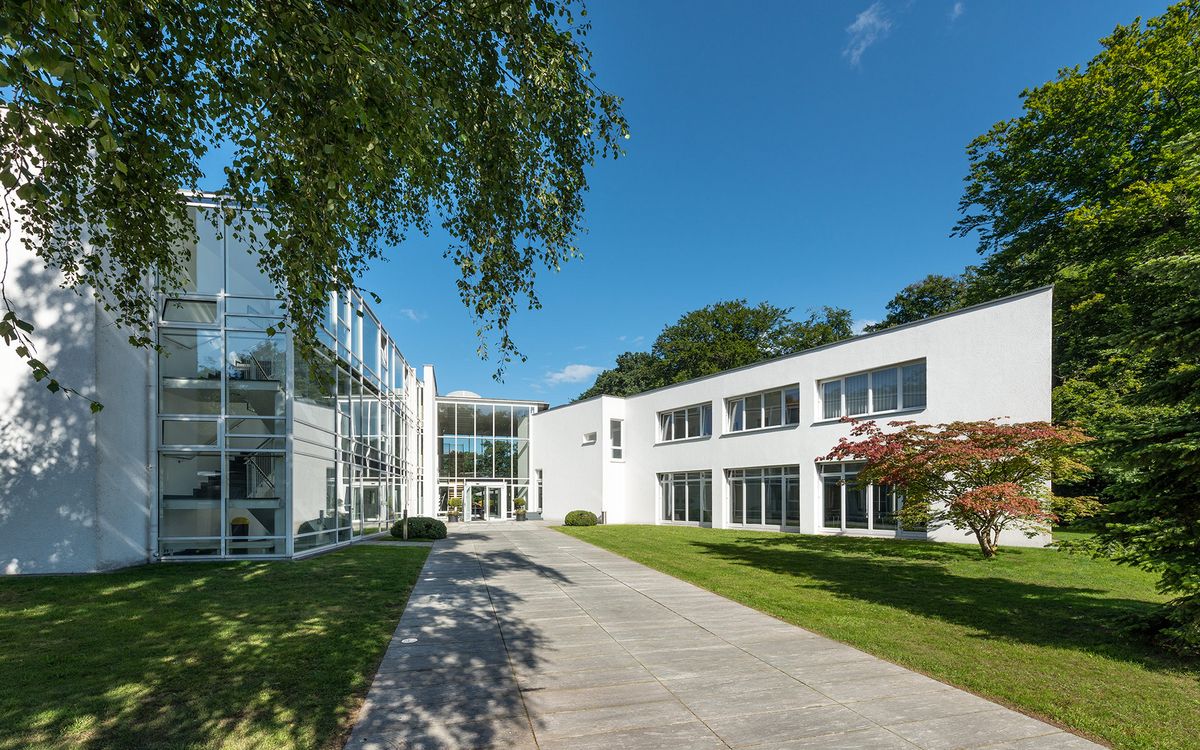
The Hanse-Wissenschaftskolleg (HWK) is a science-promoting foundation. As an "Institute for Advanced Study", it has been supporting around 50 recognised academics, authors and artists as guests (fellows) on research visits to Delmenhorst every year since 1997, thereby promoting excellent science in north-west Germany. The HWK is supported by the states of Lower Saxony and Bremen and the city of Delmenhorst.
The HWK allows its fellows to concentrate on a research project free of academic obligations and promotes dialogue between disciplines through cooperation and meeting opportunities. The fellows benefit from close co-operation with the universities in Bremen and Oldenburg and other regional research institutions as well as a large international alumni network. The HWK thus also promotes the internationalisation of regional science and its clusters of excellence.
Individual support for the fellows, an intercultural and interdisciplinary working environment and comprehensive networking with regional scientific institutions form the special profile of the HWK.
The HWK pursues four discipline-independent funding priorities in the natural sciences, humanities and social sciences: BRAIN & MIND, EARTH, TECHNOLOGY & SCIENCE, SOCIETY.
The fifth focus ARTS & LITERATURE supports the interdisciplinary collaboration of the fellows and the examination of fundamental questions concerning the creation and communication of knowledge in society. The presence of artists in residence and their working relationships with cultural institutions in the region create points of contact for a self-critical encounter between the sciences and the arts.
With up to 60 international specialist events and a public lecture series each year, the HWK also serves both experts and laypeople as a place for sophisticated intellectual debate on scientific and social issues.