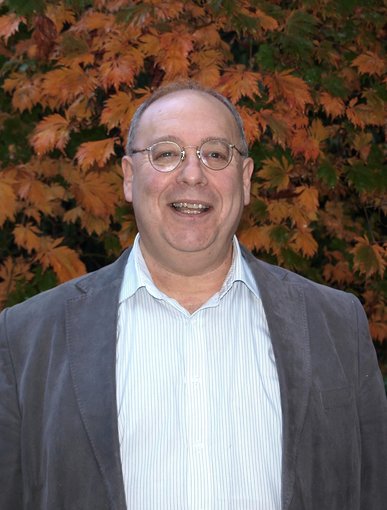
Prof. Dr. Yaron Matras

Projects & Publications
European regions have been multilingual for centuries; for 2-3 generations, our cities have exhibited extraordinary linguistic diversity. This is particularly noted in large cities. However, less attention is paid to the linguistic diversity of middle-sized cities.
With this project, we will work together with actors in Delmenhorst - schools, authorities, associations, museums - to obtain a picture of the city's linguistic diversity, its history and origins as well as its current modes of expression and the significance that languages have for their speakers and their immediate surroundings in everyday life. We explore questions such as: who speaks which languages, with whom, when and where; what is the origin and history of the languages we find in Delmenhorst; which traditions are transmitted through language and how are they maintained; how does communication work across generations as well as among neighbours and with authorities; which languages are visible on our streets and which do we hear; and much more.The project will be based on interviews and observations. Among other things, a report will be published at the end. A final event at the Hanse-Wissenschaftskolleg, at which the linguistic diversity of Delmenhorst will be presented and examined from different perspectives, is planned for spring 2026.The project is led by Prof. Dr. Yaron Matras. He is Fellow at the Hanse-Wissenschaftskolleg, guest researcher at the University of Hamburg and a researcher at the Institute of Forensic Linguistics at the University of Aston in the UK. Prof. Matras has been researching multilingualism and the documentation of smaller languages for several decades. A few months ago, he published a book on the multilingual city using the example of Manchester (‘Speech and the City’, Cambridge University Press, 2024).Students from the University of Oldenburg will take part in the project. They will be supervised by Prof. Dr. Jan Patrick Zeller, who teaches Slavic linguistics at the University of Oldenburg with a research focus on multilingualism and language variation.
This project explores attitudes to multilingualism in a global city, based on the example of Manchester, UK. I draw on collaboration between researchers and practitioners in a variety of settings, including the city council, the health care sector, schools, community-run weekend schools that teach heritage language, local museums, and others. Using observations and interviews, I examine how practitioners experience encounters with languages in the urban environment, and how those encounters prompt them to draft and implement solutions to the challenges of providing services to a multilingual population. I describe how informal networks of practitioners, activists, and researchers help consolidate practical strategies to address language needs, and how these help forward policies that support equal access to services, cultivation of heritage and skills, and celebration of multilingualism as a collective experience, giving rise to what I call a “city-language narrative” that is used as a kind of municipal identity badge. I demonstrate how these developments contrast with language policy and statements at national level, which emphasise uniformity and tend to view language difference as a barrier to social inclusion. By contrast, the ideologies and policies that emerge in the city around practical encounters with multilingualism have the potential to offer a counter-weight to current populist movements and to strengthen commitments to multiculturalism.