
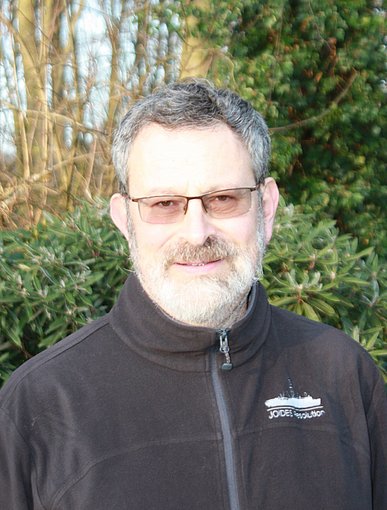
Prof. Dr. Andreas Teske
Earth
University of North Carolina at Chapel Hill, USA
Jan 2020
-
Jul 2020
Fellow
Aug 2011
-
Dec 2011
Fellow
Dec 2007
-
May 2008
Fellow
Projects & Publications
Microbial Processing of Fossil Organic Carbon in Hydrothermal Sediments of the Guaymas Basin
| Jan 2020
-
Jul 2020
Cooperation partner
Prof. Dr. Thorsten Dittmar, Carl von Ossietzky Universität Oldenburg
Dr. Gunter Wegener, Max-Planck-Institut für Marine Mikrobiologie, Bremen
Publications
Ramírez GA, Mara P, Sehein T, Wegener G, Chambers CR, Joye SB, Peterson RN, Philippe A, Burgaud G, Edgcomb VP, Teske AP (2021). Environmental factors shaping bacterial, archaeal and fungal community structure in hydrothermal sediments of Guaymas Basin, Gulf of California. PLoS ONE, 16 (9), e0256321. https://doi.org/10.1371/journal.pone.0256321
Andreas Teske, Verena Carvalho (eds.) (2020). Marine Hydrocarbon Seeps – Microbiology and Biogeochemistry of a Global Marine Habitat. Spinger International Publishing. https://doi.org/10.1007/978-3-030-34827-4
Benthic Microbial Communities in Surficial and Deep Marine Sediments
| Dec 2007
-
Dec 2011
Cooperation partner
Prof. Dr. Meinhard Simon, Carl von Ossietzky Universität Oldenburg
Prof. Dr. Bo Barker Jørgensen, Aarhus University
Publications
Biddle, J., Cardman, Z., Mendlovitz, H., Albert,D. B., Lloyd, K. G., Boetius, A. and Teske, A. (2011). Anaerobic Oxidation of Methane at Different Temperature Regimes in Guaymas Basin Hydrothermal Sediments. The ISME Journal, 6, 1018–1031. https://doi.org/10.1038/ismej.2011.164
Kubo, K., Lloyd, K. G., Biddle, J., Amann, R., Teske, A., and Knittel, K. (2012). Archaea of the Miscellaneous Crenarchaeotal Group are abundant, diverse and widespread in marine sediments. The ISME Journal, 6 (10), 1949-1965. https://doi.org/10.1038/ismej.2012.37
Teske A. (2009). Deep-Sea Hydrothermal Vents. Moselio Schaechter (ed.) Encyclopedia of Microbiology (Third Edition), Academic Press, 80-90. https://doi.org/10.1016/B978-012373944-5.00276-5
Joye, S. B., Samarkin, V. A., Orcutt, B. N., MacDonald, I. R., Hinrichs, K. U., Elvert, M., Teske A., Lloyd, K. G., Lever, M. A., Montoya, J. P. and Meile, C. D. (2009). Metabolic Variability in Seafloor Brines Revealed by Carbon and Sulphur Dynamics. Nature Geoscience, 2, 349-354. https://doi.org/10.1038/ngeo475
Luke J. McKay, Barbara J. MacGregor, Jennifer F. Biddle, Daniel B. Albert, Howard P. Mendlovitz, Daniel R. Hoer, Julius S. Lipp, Karen G. Lloyd, Andreas P. Teske (2012). Spatial heterogeneity and underlying geochemistry of phylogenetically diverse orange and white Beggiatoa mats in Guaymas Basin hydrothermal sediments. Deep Sea Research Part I: Oceanographic Research Papers, 67\r\n2012,\r\nPages, 21-31. https://doi.org/10.1016/j.dsr.2012.04.011
Teske A. (2010). Sulfate-Reducing and Methanogenic Hydrocarbon-Oxidizing Microbial Communities in the Marine Environment. Part 21: Microbial Communities Based on Hydrocarbons, Oils and Fats: Natural Habitats. Timmis, K.N. (eds.), Handbook of Hydrocarbon and Lipid Microbiology, Springer, Berlin, Heidelberg, 2203-2223. https://doi.org/10.1007/978-3-540-77587-4_160
Holler, T., Widdel, F., Knittel, K., Amann, R., Kellermann, M., Hinrichs, K.-U., Teske, A., Boetius, A. and Wegener, G. (2011). Thermophilic Anaerobic Oxidation of Methane by Marine Microbial Consortia. The ISME Journal, 5, 1946–1956. https://doi.org/10.1038/ismej.2011.77